The Hidden P&L Impact of Fragile Chains

Most conveyancing firms think of chains as an operational problem — something that slows transactions down and creates extra work. That framing understates the issue. Chains are not just an operational burden. They are a margin volatility multiplier.
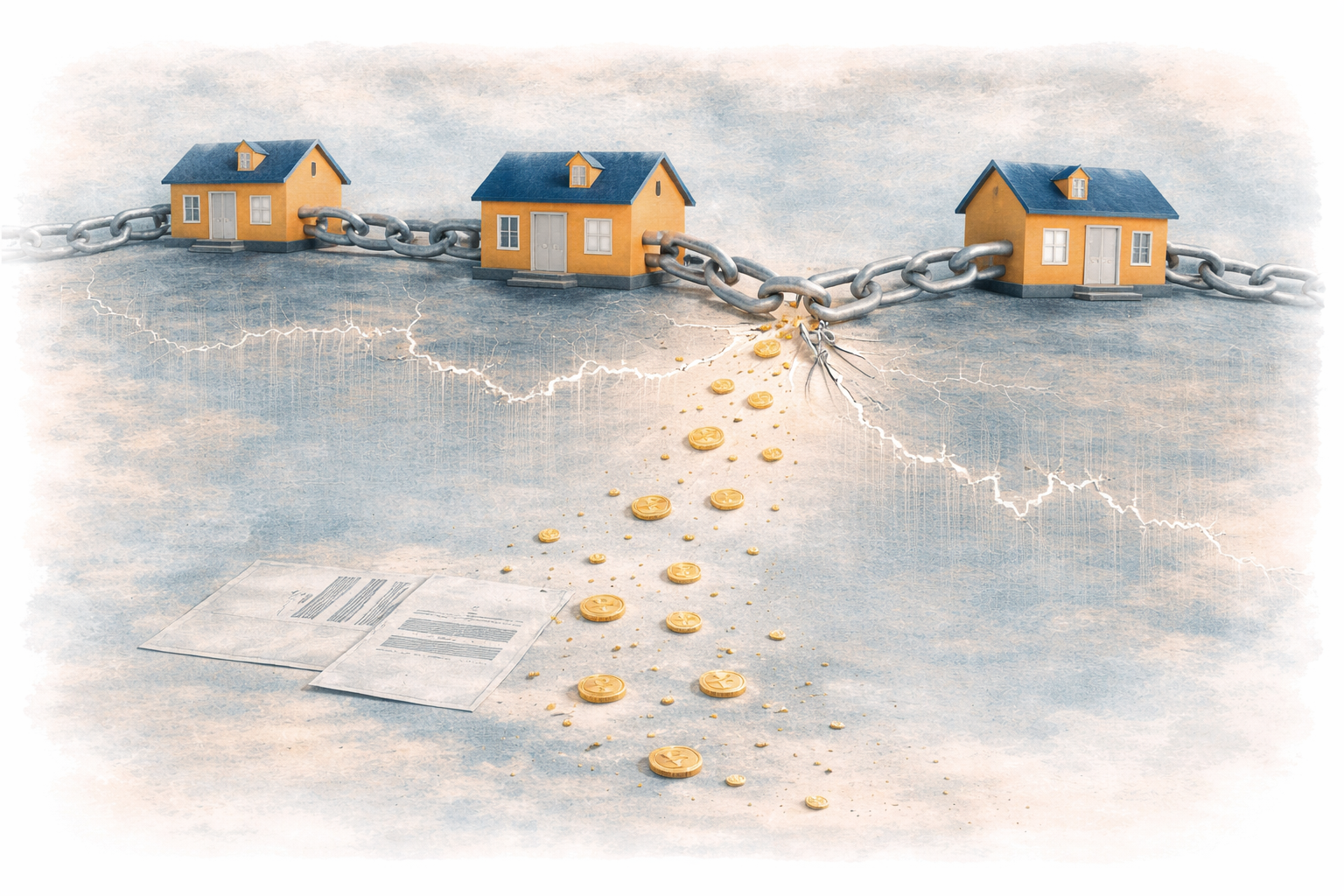
A five-property chain doesn't simply mean five transactions. It means five separate risk profiles, five lenders, five sets of client circumstances, five opportunities for delay — and one shared failure point. When any link collapses, the entire chain can fall with it. And when that collapse happens late in the process, the P&L impact is significant.
Consider what a late-stage chain collapse actually costs. There is the fee earner time — often twelve weeks or more — written off against a file that will never complete. There is the partner intervention time spent managing the fallout. There is the pipeline distortion as expected completions disappear from the month's figures. There is the reputational cost when clients who have been waiting for months are told their transaction has failed. And there is the effect on morale when fee earners see their work evaporate through no fault of their own.
None of this appears neatly on a balance sheet, but it accumulates. Firms with high exposure to long, fragile chains experience volatile weeks, unpredictable completions, and unstable revenue flow. The instability is often attributed to market conditions or client behaviour, when in reality much of it is structural — a consequence of taking on risk that could not be seen.
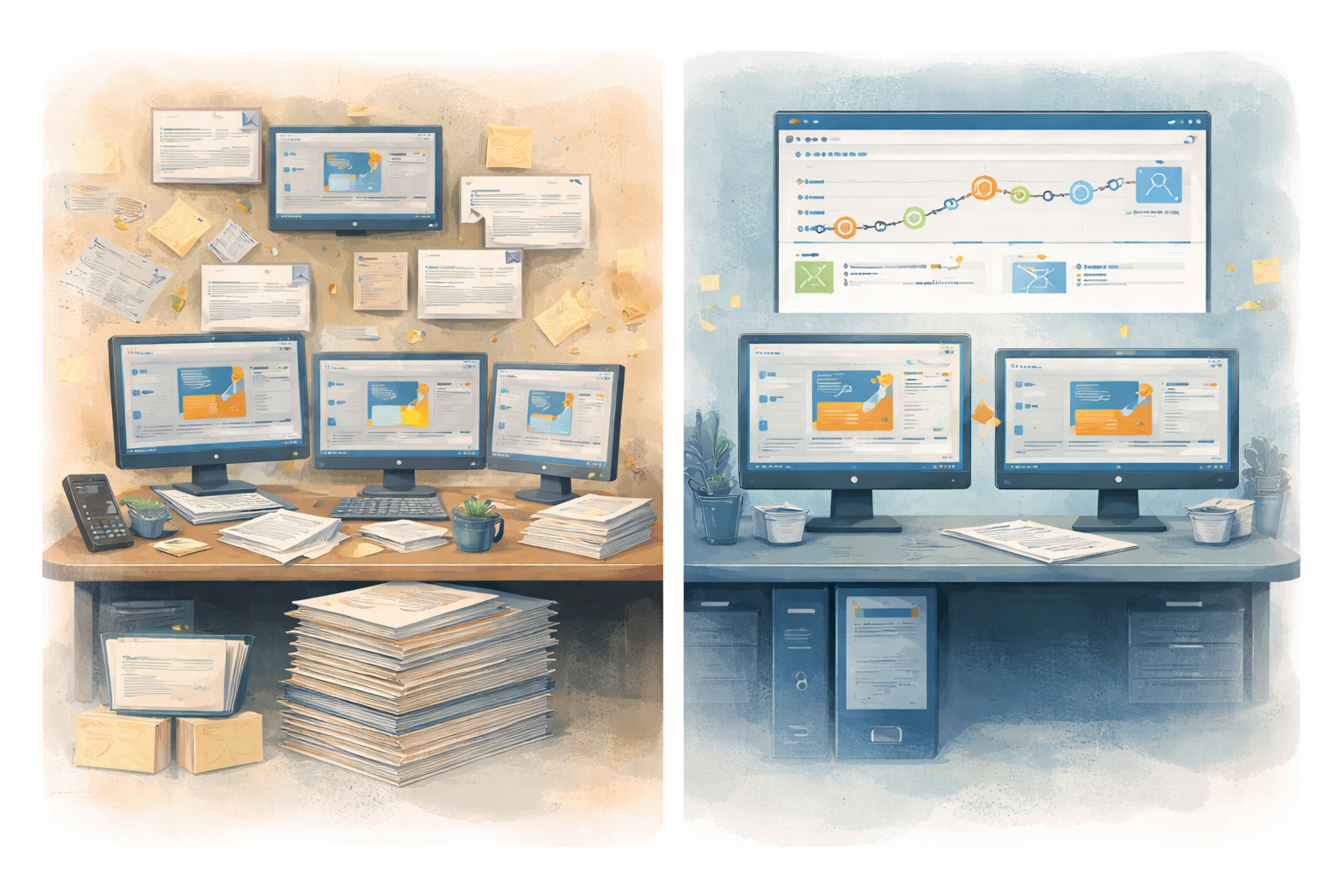
The underlying issue is not delay but uncertainty. When you cannot see where fragility sits in a chain, files look equal when they are not. Risk hides until it becomes urgent. Partners intervene too late, and fee earners firefight instead of sequencing their work around what can actually complete.
Chain visibility does not eliminate this risk, but it changes when it becomes visible. A firm that can see chain structure at the point of instruction can make informed decisions about which matters to take on and how to price them. A firm that can see chain status throughout the transaction can allocate effort accordingly, concentrating resource on aligned chains and managing client expectations on fragile ones.
This is not about working faster. It is about understanding where concentration of risk sits early enough to act — or at least early enough to stop investing time in transactions that are structurally unlikely to complete.
If you are running a twenty-fee-earner firm, ask yourself how many collapsed chains hit your P&L last quarter, and how many of those were structurally fragile weeks before anyone realised. That is not an operational question. It is a commercial one.
This is the fourth in a series exploring how property infrastructure is evolving — from file-centric processing to chain-level coordination. Developed with Renu Kiran.
#conveyancing #proptech #propertydata